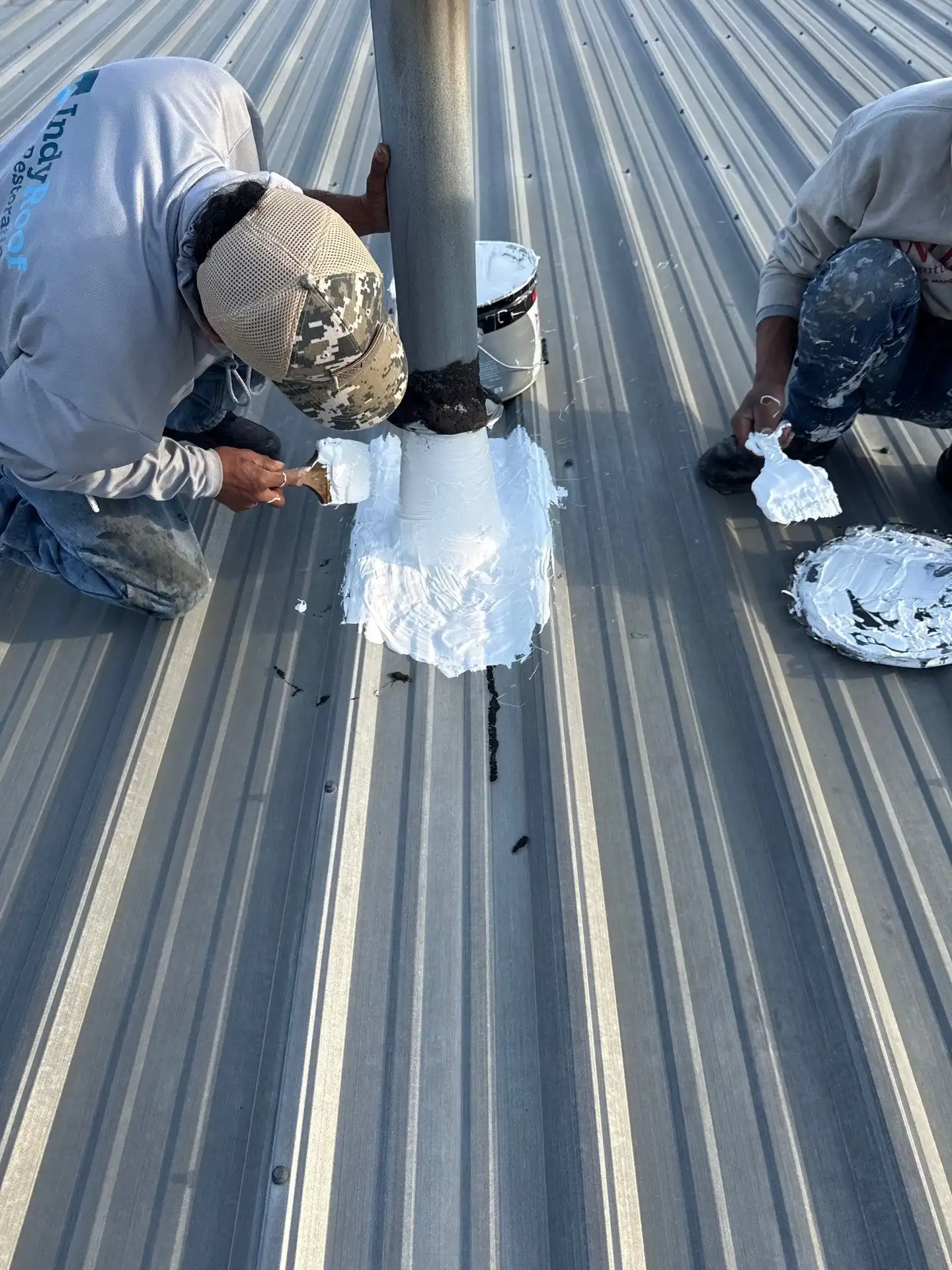
What Wind Damage Looks Like
Knowing what wind damage to a metal roof looks like helps a Woodcreek Reserve homeowner understand what an inspection checks for after a storm. Here are the forms wind damage can take.
Lifted or Loosened Panels
Severe wind can lift, loosen, or in extreme cases displace metal panels, especially at the edges where uplift is strongest. A panel that has been lifted or loosened, even subtly, can compromise the roof's water-tightness and may worsen in future wind. This is among the more serious forms of wind damage, since it affects the roof's integrity. Loosened panels are a key thing an inspection looks for after high wind.
Fastener Issues
Wind's uplift forces can stress, loosen, or back out fasteners, particularly on exposed-fastener systems, weakening the roof's hold and potentially opening leak points. Even if no panel has visibly moved, the fasteners may have been compromised by the wind. Because fasteners are central to keeping the roof down and sealed, wind-related fastener issues are an important inspection point. They can be subtle but significant.
Flashing and Edge Damage
Wind frequently affects flashing and edge details, lifting, loosening, or displacing the flashing around edges, ridges, and penetrations. Since flashing is critical to water-tightness and edges are where wind works hardest, this is a common and important form of wind damage. Displaced or lifted flashing can let water in and is a frequent finding after high wind. The edges and flashing deserve close attention.
Debris Impact
High wind often carries debris, branches, and other objects, that can strike the roof and dent panels or damage the finish, and in storms, falling limbs can cause more serious harm. This impact damage is separate from uplift but common in windstorms. Checking for debris damage, and clearing any debris left on the roof, is part of a post-wind inspection. Wind-driven impact is a real source of damage.
Subtle and Hidden Damage
Not all wind damage is obvious, since a slightly loosened panel, a stressed fastener, or a compromised seal can be hard to see from the ground while still mattering. This is why a professional inspection is the reliable way to assess wind damage, catching the subtle issues a casual look would miss. Hidden wind damage can lead to leaks if undetected. A close inspection is what reveals it.
Wind Damage, in Short
Wind damage to metal can include lifted or loosened panels, stressed or backed-out fasteners, displaced flashing and edge damage, and debris impact, with some damage subtle and hard to see. A professional inspection reliably assesses what the wind did.
It also helps Woodcreek Reserve homeowners to understand the right sequence of actions after a significant windstorm, because acting sensibly protects both the home and any potential insurance claim. The first priority is always safety, which means staying off the roof entirely, since a metal surface that may be wet, damaged, or littered with debris after a storm is genuinely dangerous, with real fall risk. From the ground, you can look for obvious signs of trouble, lifted or missing panels, visible dents, debris on the roof, or displaced flashing, and inside the home you can check for new leaks or water stains that would indicate the roof has been compromised. If you find an active leak, addressing the interior first, containing the water and moving belongings out of harm's way, limits the damage while you arrange for help. The next step is documentation, photographing what you can see safely, which will be useful if you end up filing an insurance claim. Then call a professional roofer for a thorough inspection, since much wind damage is subtle and only a close, expert look will catch loosened fasteners, slightly lifted edges, or compromised flashing that could lead to leaks. A reputable roofer can provide temporary protection if the roof is vulnerable, document the damage in detail to support a claim, and carry out a proper repair. Throughout, keep in mind that questions about insurance coverage, what is covered and how your deductible applies, depend on your specific policy and carrier, so treat general guidance as background and confirm the particulars with your own insurer.
It also helps Woodcreek Reserve homeowners to understand the right sequence of actions after a significant windstorm, because acting sensibly protects both the home and any potential insurance claim. The first priority is always safety, which means staying off the roof entirely, since a metal surface that may be wet, damaged, or littered with debris after a storm is genuinely dangerous, with real fall risk. From the ground, you can look for obvious signs of trouble, lifted or missing panels, visible dents, debris on the roof, or displaced flashing, and inside the home you can check for new leaks or water stains that would indicate the roof has been compromised. If you find an active leak, addressing the interior first, containing the water and moving belongings out of harm's way, limits the damage while you arrange for help. The next step is documentation, photographing what you can see safely, which will be useful if you end up filing an insurance claim. Then call a professional roofer for a thorough inspection, since much wind damage is subtle and only a close, expert look will catch loosened fasteners, slightly lifted edges, or compromised flashing that could lead to leaks. A reputable roofer can provide temporary protection if the roof is vulnerable, document the damage in detail to support a claim, and carry out a proper repair. Throughout, keep in mind that questions about insurance coverage, what is covered and how your deductible applies, depend on your specific policy and carrier, so treat general guidance as background and confirm the particulars with your own insurer.
It also helps Woodcreek Reserve homeowners to understand the right sequence of actions after a significant windstorm, because acting sensibly protects both the home and any potential insurance claim. The first priority is always safety, which means staying off the roof entirely, since a metal surface that may be wet, damaged, or littered with debris after a storm is genuinely dangerous, with real fall risk. From the ground, you can look for obvious signs of trouble, lifted or missing panels, visible dents, debris on the roof, or displaced flashing, and inside the home you can check for new leaks or water stains that would indicate the roof has been compromised. If you find an active leak, addressing the interior first, containing the water and moving belongings out of harm's way, limits the damage while you arrange for help. The next step is documentation, photographing what you can see safely, which will be useful if you end up filing an insurance claim. Then call a professional roofer for a thorough inspection, since much wind damage is subtle and only a close, expert look will catch loosened fasteners, slightly lifted edges, or compromised flashing that could lead to leaks. A reputable roofer can provide temporary protection if the roof is vulnerable, document the damage in detail to support a claim, and carry out a proper repair. Throughout, keep in mind that questions about insurance coverage, what is covered and how your deductible applies, depend on your specific policy and carrier, so treat general guidance as background and confirm the particulars with your own insurer.
Find Out What the Wind Did
Woodcreek Reserve Metal Roofing will inspect your Woodcreek Reserve metal roof after high wind, checking the panels, fasteners, flashing, and edges and identifying any damage. Call {phone} for a free inspection and an honest assessment of what, if anything, the wind harmed.